
Most people wrap a cut lemon in plastic and find a shriveled, dried-out rind two days later. We tested five storage methods over a full week. Here's what actually keeps the flesh juicy — and why plastic wrap almost always fails.
Store a cut lemon cut-side down in an airtight silicone keeper or sealed container in the refrigerator. This prevents the exposed flesh from contacting air, which is the main cause of drying and hardening. Done correctly, a cut lemon stays juicy and usable for 5 to 7 days. Plastic wrap left loose around the cut surface typically gives you 1 to 2 days before the flesh hardens noticeably.
Why a Cut Lemon Dries Out So Fast
A whole lemon has a thick, waxy rind that protects the flesh from moisture loss. The moment you cut it, that protection disappears on the exposed surface. Two things start happening at once.
First, the essential oils in the lemon peel begin to evaporate from the cut edge. This isn't just about appearance — those oils carry most of what makes a lemon smell and taste fresh. Second, the juice cells in the exposed flesh lose moisture directly to the air around them. What you get is a hardened, slightly bitter surface layer that most people cut off before using — wasting a portion of the lemon every time.
Refrigeration slows the process but doesn't stop it. The fridge is deliberately dry, which actually accelerates surface moisture loss if the cut lemon is uncovered. The method matters far more than the temperature.
Can You Leave a Cut Lemon Out?
Yes, you can leave a cut lemon out at room temperature, but only for a short time. A cut lemon can typically sit out for about 2 to 4 hours before it starts to dry out, lose freshness, and become more susceptible to bacterial growth.
5 Methods Tested: Results Over 7 Days
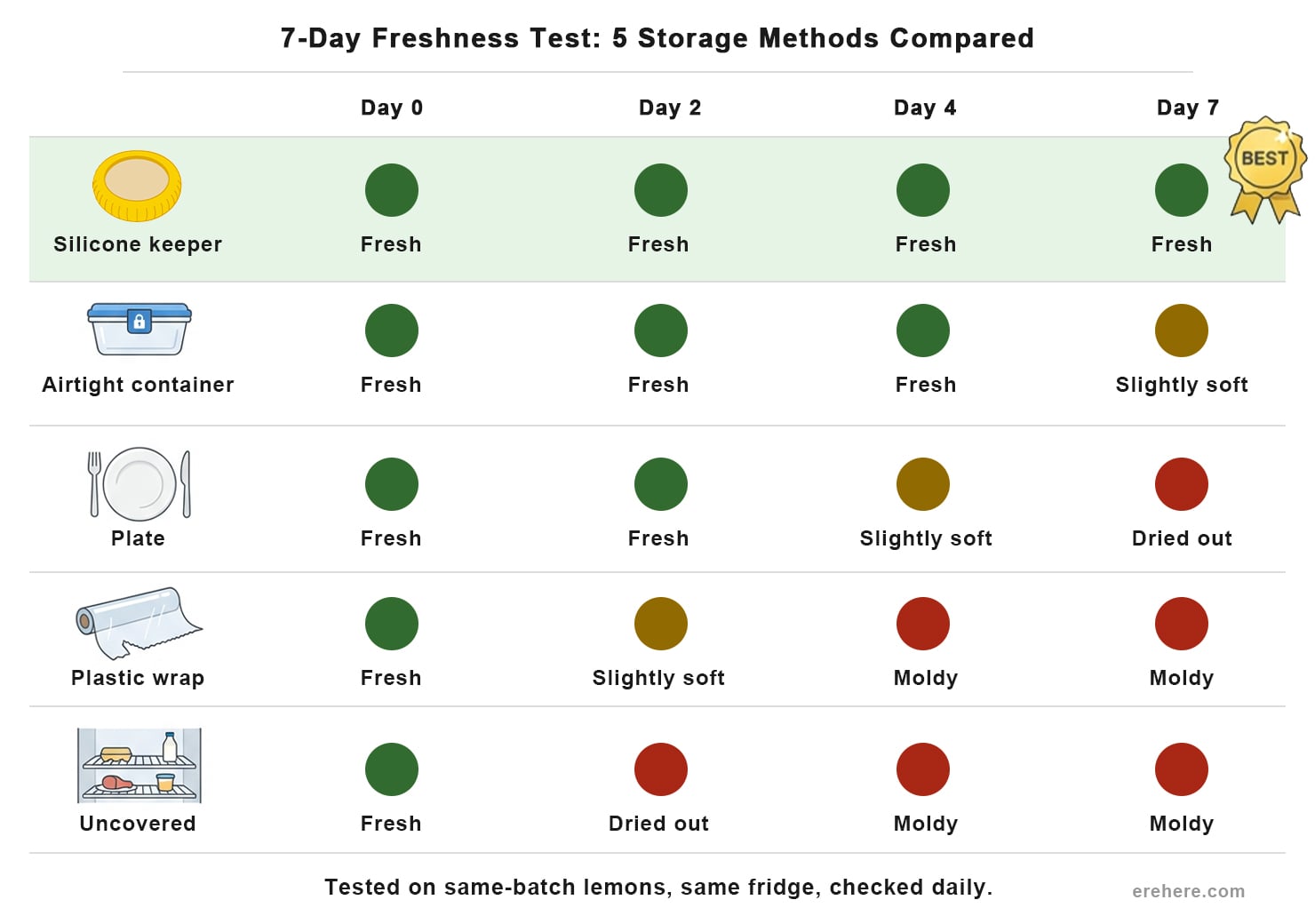
We used the same batch of lemons, cut the same way, and stored each half using a different method in the same refrigerator. We checked daily and assessed juice content, texture, and aroma.
| Storage method | Day 2 | Day 4 | Day 7 |
|---|---|---|---|
| Silicone keeper (cut-side sealed) | Fresh, juicy | Still firm | Usable, slight drying at edge |
| Airtight container, cut-side down | Fresh | Good | Surface slightly dry |
| Plate, cut-side down (no cover) | Acceptable | Edges drying | Hard surface, must trim |
| Plastic wrap (loose) | Minor hardening | Dry, sticky surface | Poor, 5mm+ must be trimmed |
| Uncovered in fridge | Hard surface | Very dry | Inedible surface, flavour lost |
The silicone keeper consistently outperformed everything else because its flexible seal presses directly against the cut surface — there's no air gap between the flesh and the barrier. An airtight container with the lemon placed cut-side down comes close, as long as the container is small enough that the lemon touches the base.
Each Method in Detail
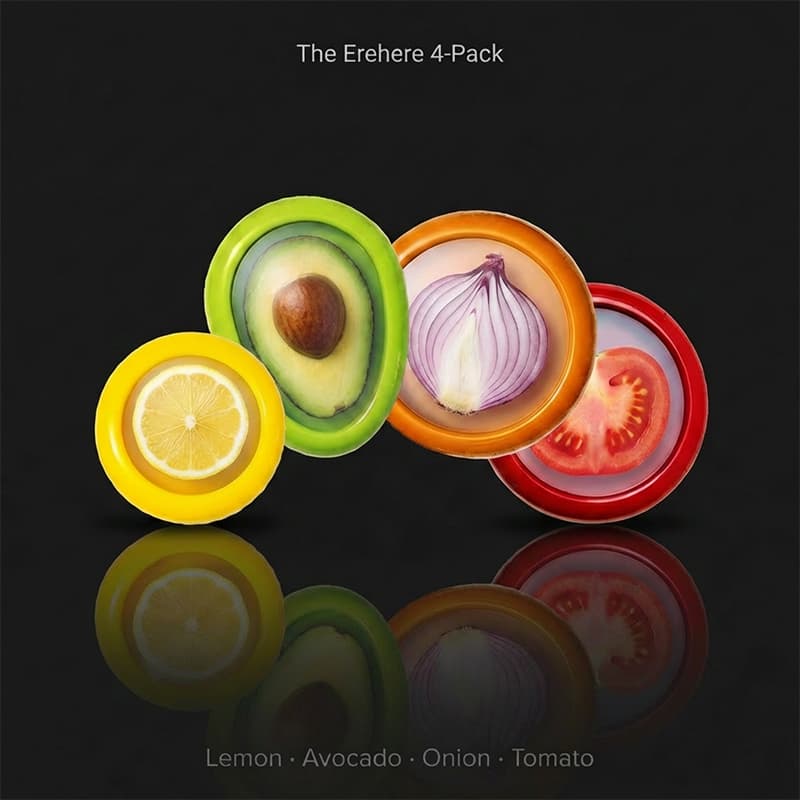
A flexible silicone keeper presses directly against the contour of a lemon half, eliminating the air gap between the flesh and the seal. This is the same mechanism used in Erehere's 4-piece keeper set, which covers lemon halves as well as avocado, onion, and tomato.
At day 7, the lemon still yielded usable juice with only minor drying at the very edge. No other method came close at this time point.
Place the lemon half cut-side down in the smallest container that will fit it. The less headspace, the less air in contact with the flesh. A tight-fitting lid is essential. This works nearly as well as a silicone keeper and is a good option if you don't have one.
Key detail: the container size matters. A lemon rattling around in a large container has significant air exposure despite the sealed lid.
Setting the lemon directly on a clean plate limits air exposure at the cut surface. It's better than plastic wrap in the short term because the plate creates a seal of sorts. The limitation is the perimeter, where air still contacts the flesh.
This works for short-term storage (use within 48 hours), but isn't reliable beyond that. The lemon also picks up any residual smells from the fridge surface.
Plastic wrap is what most people reach for, but it consistently underperforms in practice. The issue: it's nearly impossible to press plastic wrap evenly against a curved lemon surface without leaving gaps, especially around the seed pockets. Air gets in through those gaps and dries the flesh unevenly.
If you use plastic wrap, press it firmly over the entire cut surface and use several layers. Even then, expect noticeable drying by day 3.
The fridge's dry environment will dessicate the cut surface within hours. By day 2, you'll need to trim at least 4–5mm of hardened flesh before the lemon is usable. The essential oils in the peel also evaporate much faster, significantly reducing the aroma and zest quality.
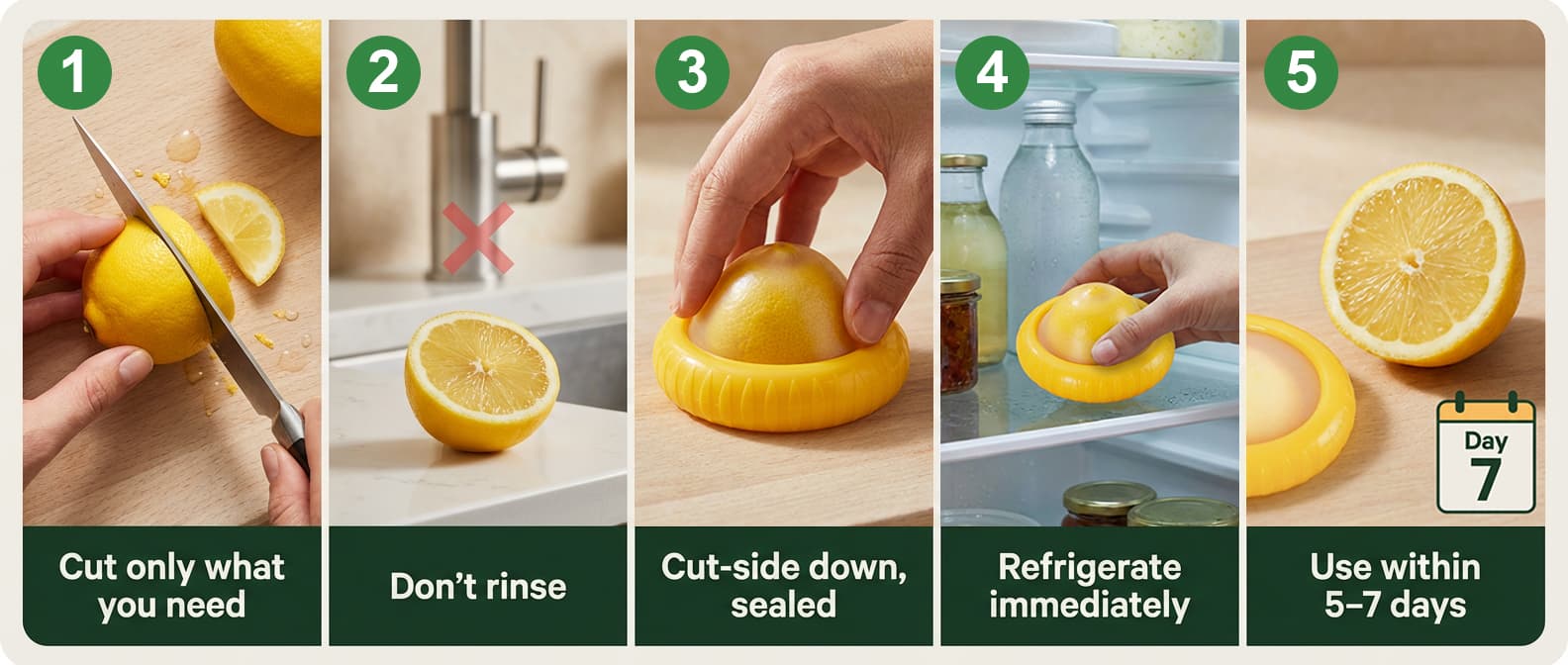
Step-by-Step: The Right Way to Store a Cut Lemon
Stop trimming dried lemon every time you open the fridge
The Erehere 4-pack keeps cut lemon, avocado, onion and tomato fresh in one set. Ships from the US in 3–5 days. BPA-free, dishwasher safe.
What About Lemon Zest — Does Storage Affect It?
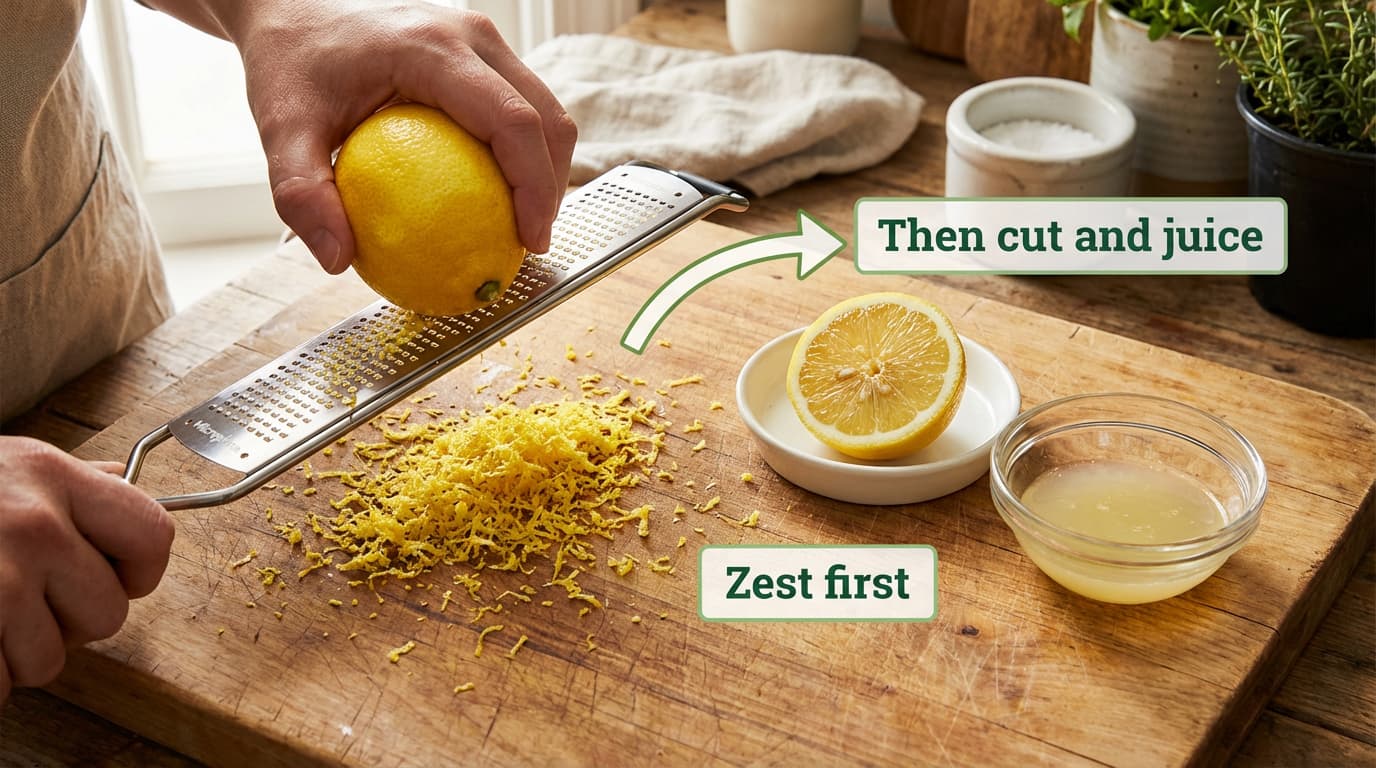
Yes, and this matters more than most people realise. The fragrant oils in lemon zest are highly volatile. Once the peel is exposed (either from cutting or from zesting first), those oils begin evaporating within hours. A lemon stored poorly for three days will yield significantly less aroma when zested than a freshly cut one.
If you need both juice and zest from a lemon, always zest first, then cut and juice. You can't zest a lemon half, but you can store the half after zesting and it will still yield usable juice for several days.
If you've already cut the lemon and need the zest, use a fine Microplane over the half — you can still get a useful amount even from a cut surface, just avoid the white pith underneath.
Can You Freeze a Cut Lemon?
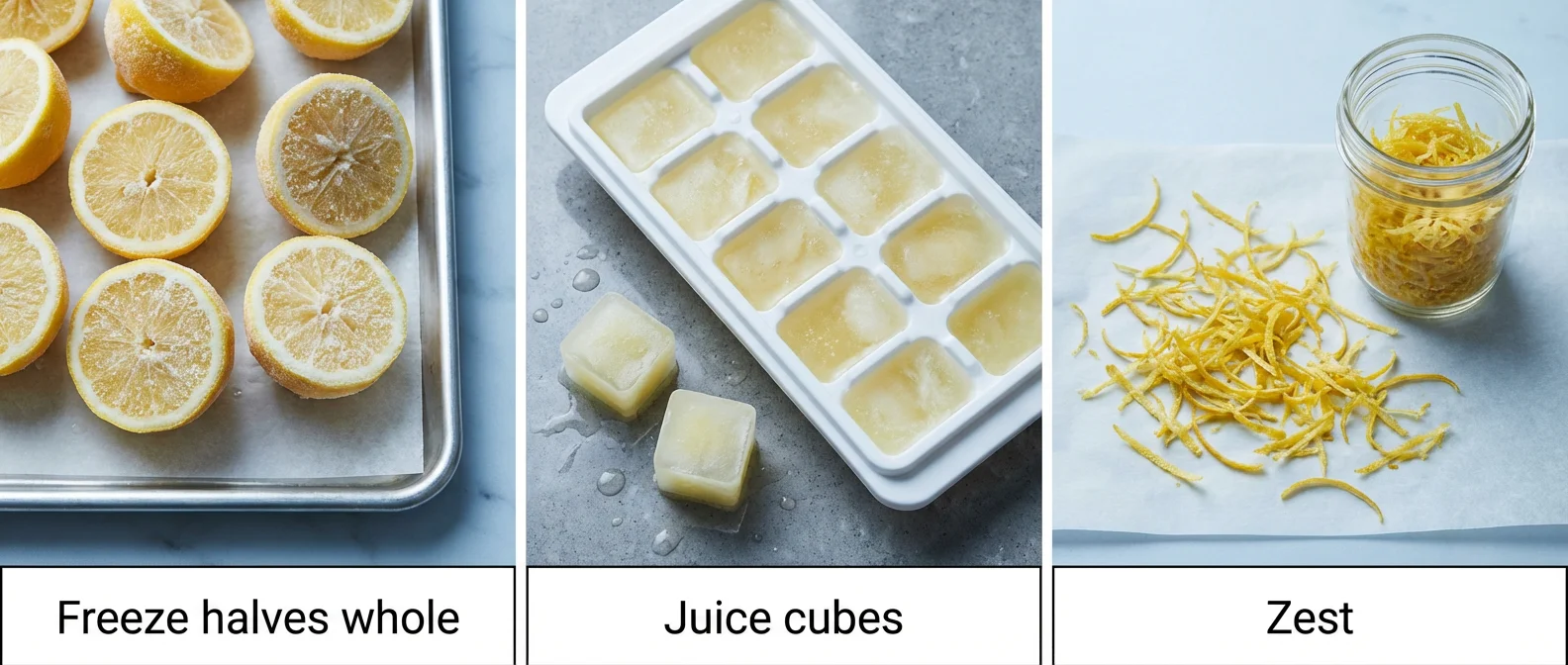
Freezing works well for lemons and is significantly underused. Here are the three practical approaches:
- Freeze lemon halves whole: Place cut-side up on a baking sheet, freeze until solid (about 2 hours), then transfer to a bag. Thaw in the fridge for 30 minutes before use. Texture softens slightly but juice content is preserved.
- Freeze juice in ice cube trays: Each standard cube is roughly 2 tablespoons — convenient for recipes. Keeps for 3 to 4 months. Add zest to the cubes before freezing for extra flavour.
- Freeze the zest separately: Spread grated zest on parchment, freeze until dry, then store in a small airtight container. Keeps for 6 months with almost no flavour loss.
Freezing is the right answer when you know you won't use the lemon within the week. For everyday use, proper refrigerator storage in a silicone keeper is simpler and keeps the lemon ready to use without thawing.
Frequently Asked Questions
How long does a cut lemon last in the fridge?
Should I wrap a cut lemon in plastic wrap?
How do you keep a cut lemon from drying out?
Can I store a cut lemon at room temperature?
Is it safe to use a lemon that's been in the fridge for a week?
Does storing a lemon with other produce affect the taste?
The Short Version
Cut lemons dry out because the exposed flesh loses moisture to air. The fix is to seal that surface — cut-side down, in an airtight container or silicone keeper — and refrigerate immediately. Done right, the lemon stays juicy for nearly a week.
Plastic wrap is the default because it's always within reach, but it almost never provides a proper seal. If you regularly use half a lemon at a time, a purpose-built produce keeper pays for itself in avoided waste within the first few uses.
If you also deal with half avocados and half onions — which most people who cook regularly do — the Erehere 4-pack handles all four in one set, at under $4 per keeper.

