
Quick Answer
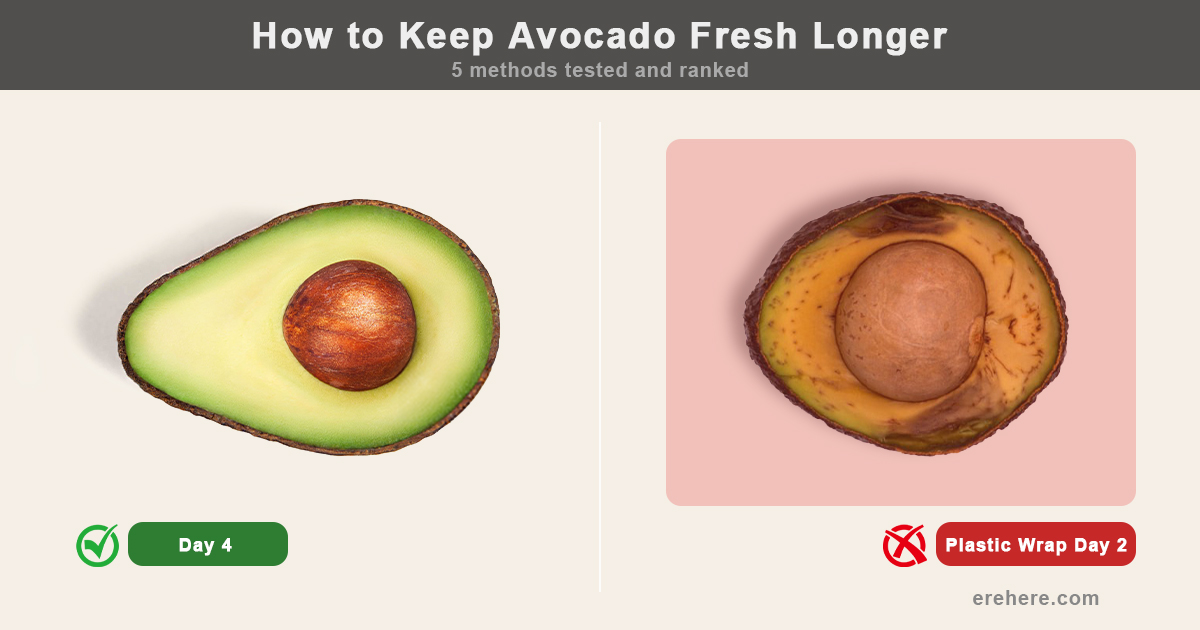
The best way to keep avocado fresh longer is an airtight silicone container that physically blocks oxygen from reaching the cut flesh. Stored this way, a cut avocado stays green and creamy for up to 4 days with zero browning — no lemon juice, no pit trick, no plastic wrap required. Every other common method only delays oxidation rather than stopping it.
You cut an avocado. You use half. You do everything you were told — leave the pit in, brush on lemon juice, press on plastic wrap — and by the next morning it's still brown, still oxidized, and heading straight for the trash.
Cut avocado lasts about 30–60 minutes at room temperature before browning begins. In the fridge with the right method, up to 4 days.
This happens to most people several times a week. Not because they're doing something wrong, but because most avocado storage advice is incomplete. It focuses on slowing oxidation without addressing the actual cause.
This guide covers every common storage method with a frank assessment of what actually happens, the science behind why browning occurs, and the one approach that consistently produces green, creamy avocado days after cutting.
Why Avocado Browns After Cutting
Avocado flesh contains compounds called polyphenols and an enzyme called polyphenol oxidase. These exist separately inside the cells of an intact avocado. When you cut the fruit, you rupture cell walls and expose both compounds to each other — and to oxygen in the surrounding air.
The reaction is immediate. Polyphenol oxidase uses oxygen to convert polyphenols into dark-colored melanin compounds. This is exactly the same chemistry behind the browning of cut apples or sliced mushrooms. It is a normal oxidative reaction, not a sign that the avocado has spoiled.
The practical implication: any storage method that cannot physically block oxygen from reaching the cut surface will only slow this reaction, not stop it. The avocado will still brown — just more slowly.
5 Avocado Storage Methods Tested and Ranked
Method 5: Leave It Uncovered at Room Temperature
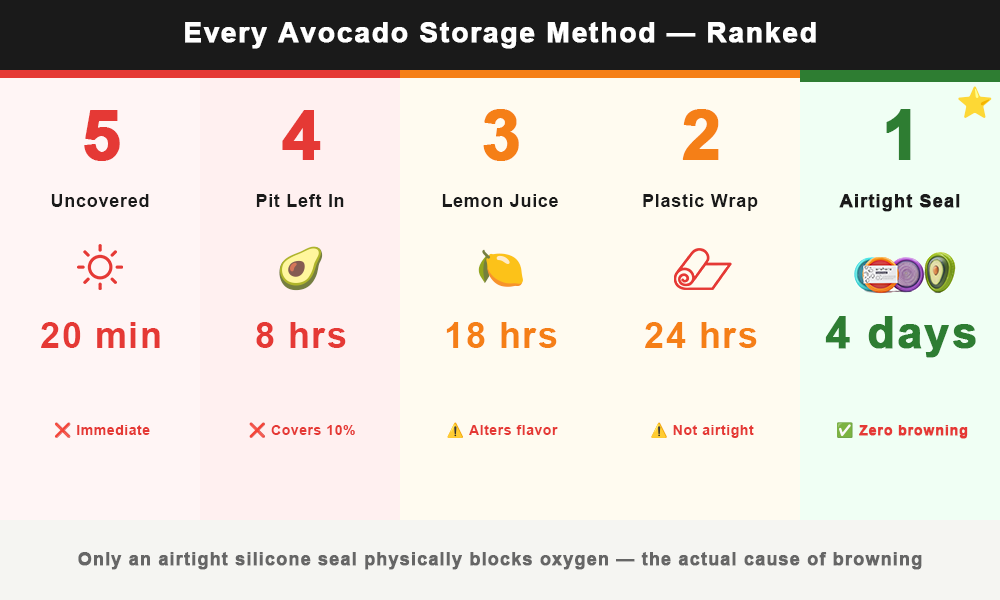
No storage at all. Within 20 to 30 minutes, the surface of a cut avocado shows visible browning. Within an hour, the flesh darkens significantly. Within a few hours at room temperature, the texture begins to deteriorate. This is the baseline — everything else is measured against how much improvement it provides over no intervention at all.
Verdict: use only if you plan to eat the other half within the hour.
Method 4: Leave the Pit in the Unused Half
This is the most widely shared avocado storage hack and the most misunderstood. The pit does prevent browning — but only in the area it physically covers, which is roughly 10 to 15 percent of the cut surface. Every exposed part of the flesh around the pit oxidizes normally.
The reason this hack has persisted is that people tend to scoop from the pit outward, eating the pit-adjacent flesh first. By the time they reach the outer edges, the browning there seems inevitable and they don't connect it to the pit's limited coverage. The pit provides comfort, not actual preservation.
Verdict: 8 to 12 hours maximum, with significant browning on the outer flesh. Better than nothing, far from effective.
Method 3: Brush with Lemon or Lime Juice
This one has genuine science behind it. The ascorbic acid in citrus juice temporarily inhibits polyphenol oxidase activity, slowing the oxidation reaction. It also lowers the pH of the surface, which further reduces enzymatic activity.
In practice: a thorough coating of lemon juice can keep a cut avocado looking green for 12 to 18 hours, sometimes longer if stored in the refrigerator. The problem is twofold. First, the inhibition is temporary — the acid breaks down and the enzyme resumes activity. Second, the moisture and acid change the texture of the outer flesh, making it slightly soft and citrus-flavored, which affects dishes where the avocado's natural flavor matters.
Verdict: solid for same-day use. Not adequate for 48-hour storage. Alters flavor and texture.
Method 2: Cover Tightly with Plastic Wrap
Pressing plastic wrap directly against the cut surface, eliminating air gaps, is meaningfully better than lemon juice for texture preservation. A well-applied plastic wrap keeps a refrigerated avocado green for 12 to 24 hours in most cases.
The limitation is physical. Plastic wrap is not airtight. The molecular structure of standard polyethylene wrap has gaps large enough for oxygen molecules to pass through over time. Additionally, the edges where the wrap meets the avocado flesh are rarely fully sealed. The wrap slows oxygen exposure rather than blocking it.
Verdict: 12 to 24 hours. Better than the pit trick or lemon juice for texture. Does not prevent eventual browning.
Method 1: Airtight Silicone Container
An avocado keeper with a food-grade silicone seal creates a physical barrier that oxygen cannot penetrate. With the cut surface pressed directly against the seal, there is no air contact with the flesh at all. The oxidation reaction cannot proceed without oxygen.
In testing, a cut avocado half stored cut-side down in an Erehere Avocado Storage Container stays green and creamy for 3 to 4 days in the refrigerator with no other intervention. No lemon juice. No plastic wrap. No pit. The flesh texture is unchanged from day one.
Verdict: 3 to 4 days, zero browning, no flavor alteration. The only method that stops oxidation rather than delaying it.
| Method | How Long It Lasts | Texture Impact | Verdict |
|---|---|---|---|
| Uncovered | 20–30 min | Deteriorates fast | ❌ Baseline only |
| Pit left in | 8–12 hrs | Outer flesh browns | ❌ Covers 10% only |
| Lemon juice | 12–18 hrs | Soft + citrus flavor | ⚠️ Alters taste |
| Plastic wrap | 12–24 hrs | Good | ⚠️ Not fully airtight |
| Airtight silicone | 3–4 days | Unchanged | ✅ Best option |
The Method That Actually Works: Step by Step
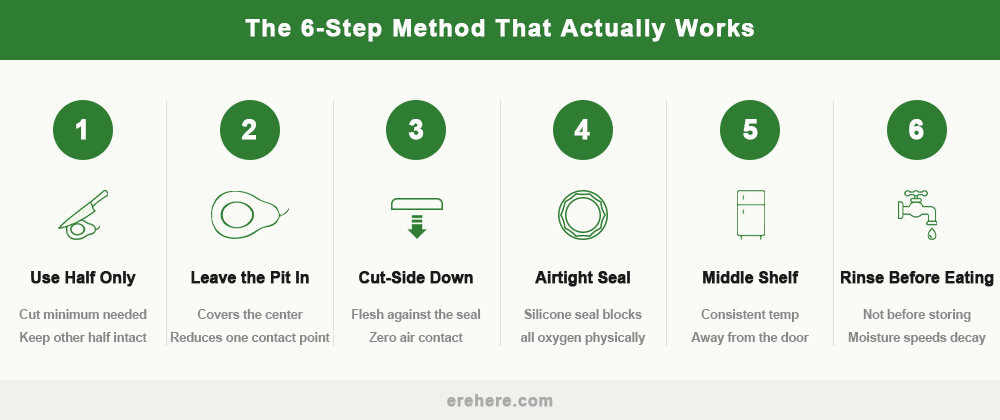
- Cut only what you need. Every additional cut increases exposed surface area. Use the minimum amount required and keep the other half intact as long as possible.
- Do not remove the pit. Leave it in the half you're storing. It covers a small area but it's one less point of oxygen contact.
- Place cut-side down against the silicone seal. The flat cut surface needs to press directly against the seal of the container. This eliminates all air contact between the flesh and the container interior.
- Refrigerate within 15 minutes. Room temperature significantly accelerates oxidation. Get it into the refrigerator quickly after cutting.
- Store on a middle shelf, away from the door. Fridge door temperatures fluctuate every time the door opens. A middle shelf maintains the most consistent temperature, ideally 35–40°F.
- Do not rinse before storing. Adding moisture to the cut surface accelerates bacterial activity. Rinse immediately before eating, not before storing.
What About Water Storage?
A hack that has circulated on social media involves submerging cut avocado in water in the refrigerator. This should be avoided entirely. The FDA issued a statement warning against this practice, with researchers finding that avocados stored in water showed significantly elevated risk of Listeria monocytogenes and Salmonella contamination compared to avocados stored by other methods. The water creates an environment that promotes pathogen growth on the avocado surface. The visual result may look fresh, but the food safety risk is real.
Can You Freeze Avocado?
Yes, with important caveats. Freezing stops oxidation completely, and frozen avocado keeps well for 3 to 6 months. The problem is texture: ice crystals rupture the cell walls during freezing, and thawed avocado becomes soft and slightly watery. It works well for smoothies, guacamole, and any application where texture is blended or mixed. It does not work for sliced applications where you want the firm, buttery texture of fresh avocado.
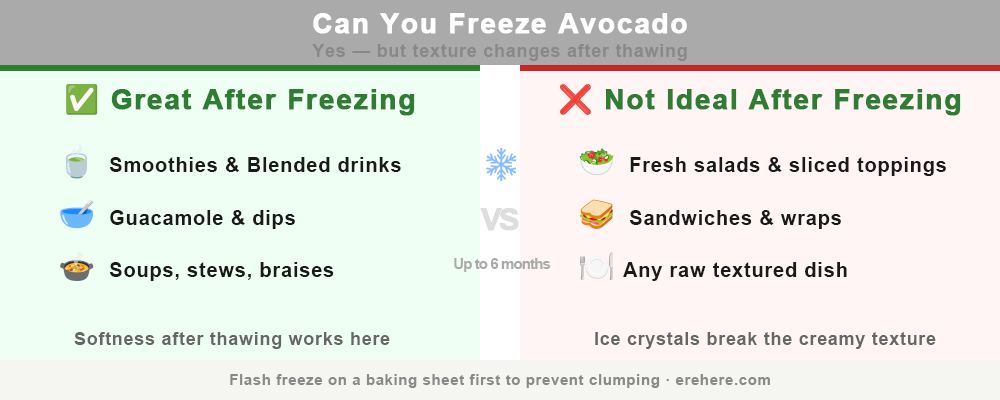
To freeze properly: mash the avocado, add a squeeze of lemon juice to slow surface oxidation, and store in a sealed freezer bag with all air removed. Freeze flat for easy stacking and faster thawing.
How to Tell If a Stored Avocado Has Gone Bad
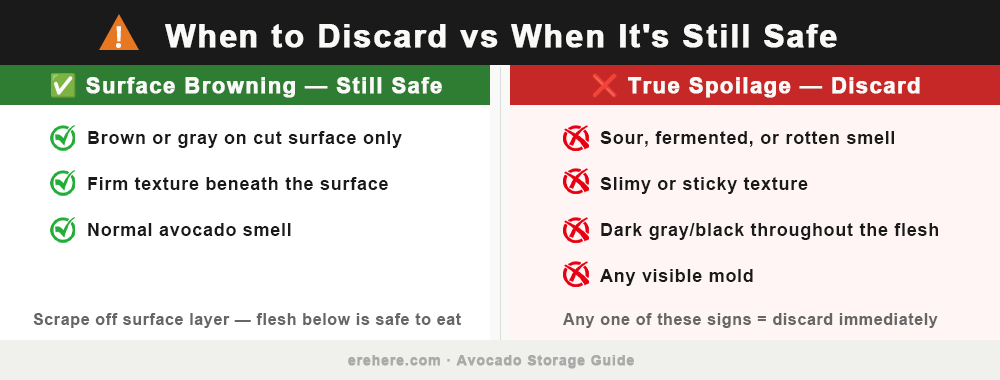
A properly stored avocado that has been refrigerated in an airtight container is safe to eat for 3 to 4 days. Signs that it has genuinely spoiled — rather than just browned — include a sour or fermented smell, a slimy texture on the cut surface, dark gray or black coloration throughout the flesh (not just surface browning), or any visible mold. Surface browning alone, without these other signs, is aesthetic rather than a food safety concern. You can scrape off a thin layer of browned flesh and the avocado underneath is safe to eat.
We put this method to the test against plastic wrap. See the day-by-day photos: avocado keeper tested vs plastic wrap — full 7-day results
The Real Cost of Getting This Wrong
At current US prices, an avocado costs roughly $1.50 on average. If you buy three per week and throw away half of each one — which is the pattern for most households — that is $234 per year going in the trash. The average US household wastes approximately $1,500 in food annually according to USDA data, and produce is the largest single category of that waste.
An airtight produce keeper set that covers avocado, onion, tomato, and lemon costs $14.99. At three avocados per week with half wasted each time, it pays for itself within the first five days of use.
Frequently Asked Questions
How long does a cut avocado last in the fridge?
In an airtight silicone container stored cut-side down against the seal: 3 to 4 days with no browning. In plastic wrap: 12 to 24 hours before visible browning. With lemon juice: 12 to 18 hours. With the pit left in: 8 to 12 hours on the outer flesh.
Does leaving the pit in actually work?
Partially. The pit physically covers the area of flesh directly beneath it, which prevents browning in that zone. It covers approximately 10 to 15 percent of the total cut surface. The rest of the flesh browns normally. The effect is real but limited in scope.
Does lemon juice keep avocado green?
Yes, temporarily. The ascorbic acid in lemon juice inhibits polyphenol oxidase activity and lowers surface pH, both of which slow oxidation. The effect lasts 12 to 18 hours in most cases. After that, the acid breaks down and browning proceeds. It also imparts a citrus flavor to the outer flesh.
Is browned avocado safe to eat?
Yes. Browning is caused by oxidation — the same reaction that browns cut apples — not by bacterial spoilage. The flesh beneath the brown surface layer is safe to eat. Scrape off the discolored layer and the avocado underneath is fine. Signs of actual spoilage are sour smell, slimy texture, or mold.
Why is water storage dangerous for avocado?
The FDA does not recommend storing avocados submerged in water. According to an FDA statement reported by major media , the main concern is that residual pathogens such as Listeria monocytogenes and Salmonella residing on the avocado surface may multiply during water storage. FDA scientists further found that Listeria has the potential to infiltrate from the skin directly into the edible pulp — meaning even washing the skin beforehand would not eliminate the contamination risk. Avoid this method entirely regardless of how fresh the result appears.
What is the best container for storing cut avocado?
A container with a food-grade silicone seal sized to fit a half avocado, stored cut-side down so the flesh presses directly against the seal. This eliminates all air contact and stops oxidation at the source. BPA-free materials and dishwasher compatibility are worth checking for everyday use.

