
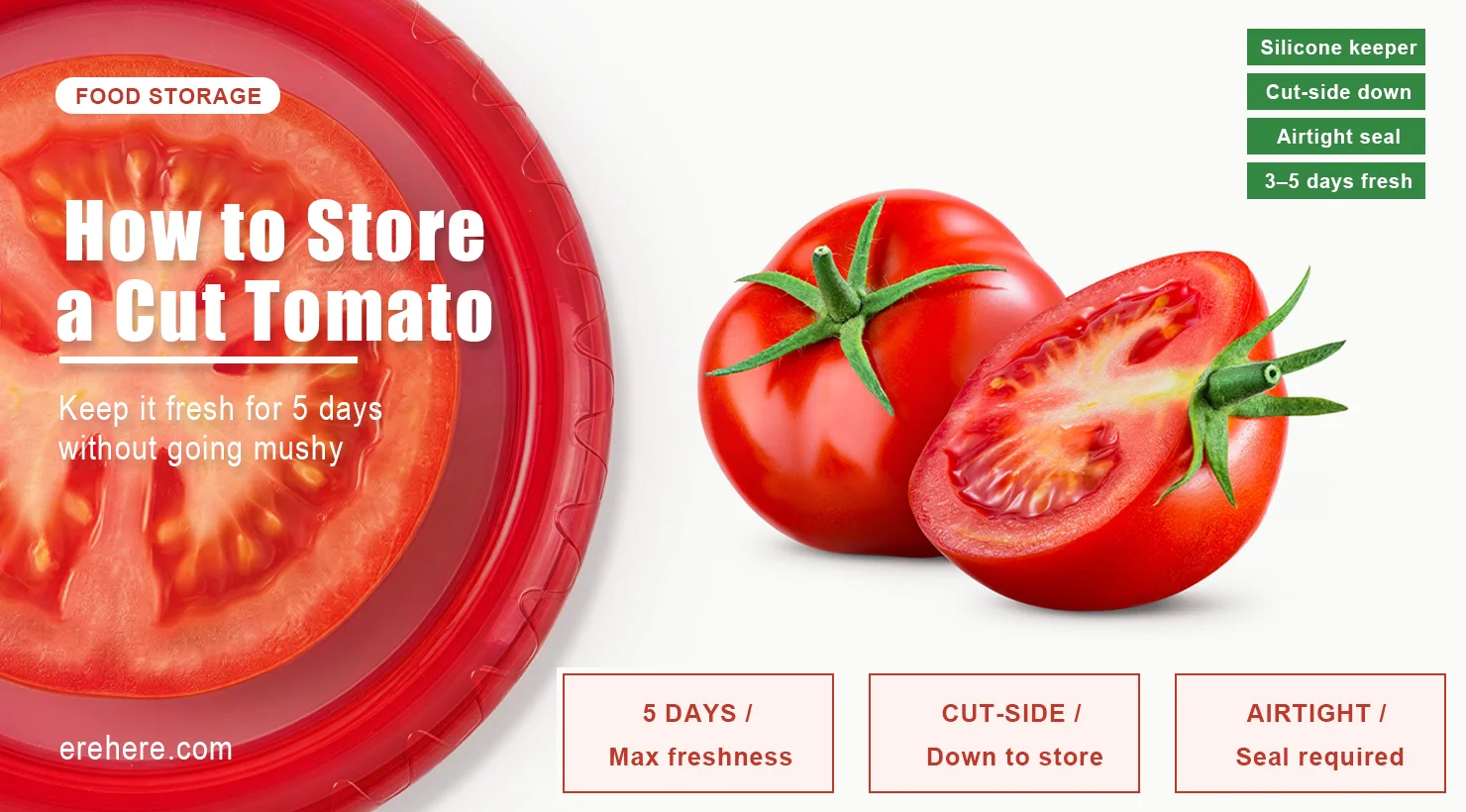
You used half a tomato. Now the other half is sitting there, exposed, slowly turning into a watery mess. There's a right way to handle this — and most people aren't doing it.
Store a cut tomato cut-side down on a paper towel inside an airtight container, then refrigerate. This keeps it fresh for 3 to 5 days. The paper towel absorbs excess moisture; the sealed container blocks air. Take it out 20–30 minutes before eating to restore flavor — cold kills the taste.
Why Cut Tomatoes Go Bad So Fast
A whole tomato has its skin acting as a natural barrier — protecting the flesh from air, bacteria, and moisture loss. The moment you cut it, that protection disappears on the exposed side.
Two things happen simultaneously. First, the cut surface starts losing moisture through evaporation, making the flesh dry and leathery. Second, bacteria from the air and your hands land on the wet, nutrient-rich flesh and multiply fast — especially at room temperature.
There's also a refrigeration paradox with tomatoes. Cold temperatures below 50°F (10°C) break down the volatile compounds responsible for a tomato's flavor. But for cut tomatoes, the risk of bacterial growth outweighs the texture trade-off. The fridge is non-negotiable — just don't store them in the coldest spot.
5 Methods Tested Over 7 Days
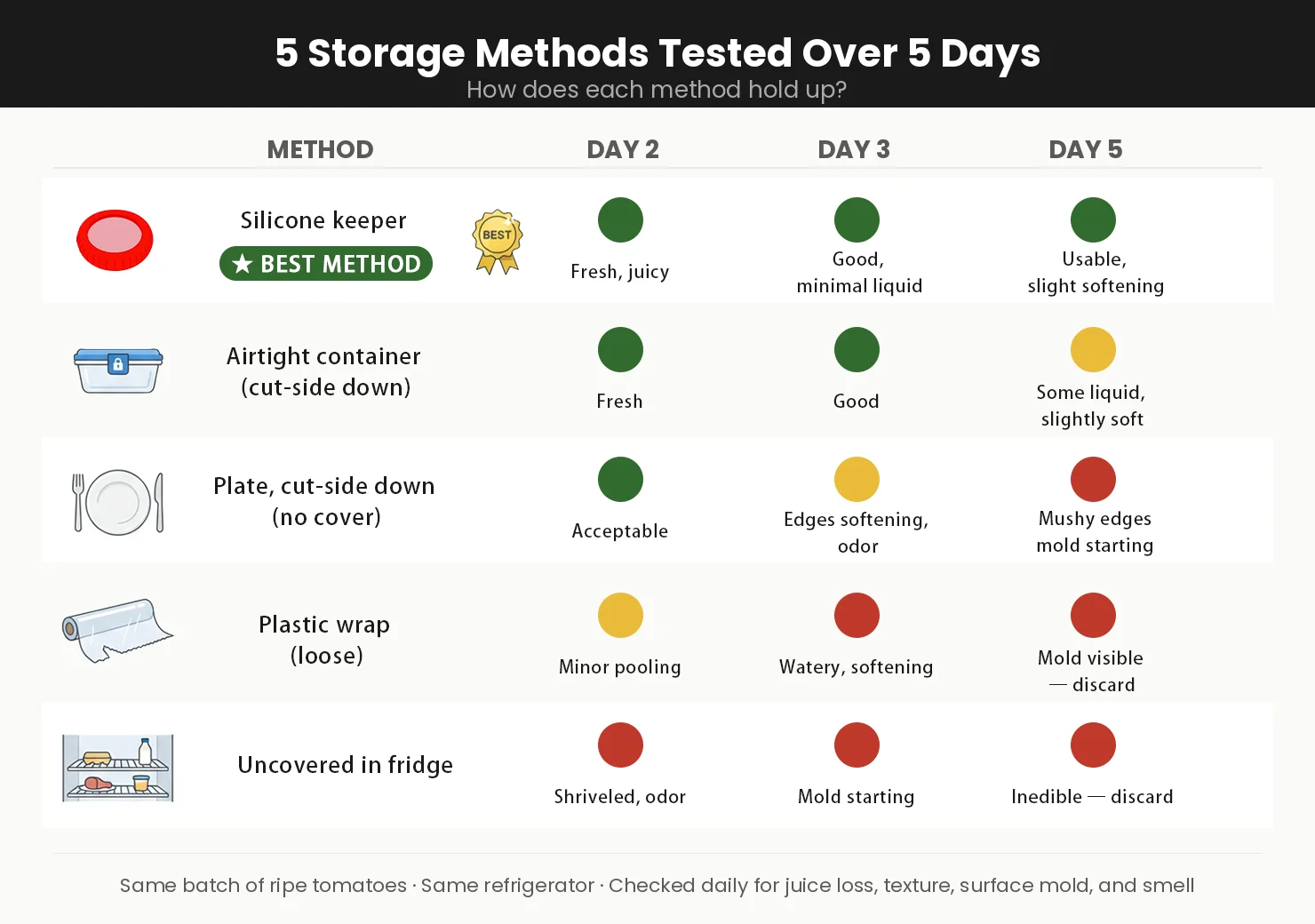
| Method | Day 2 | Day 4 | Day 7 | Verdict |
|---|---|---|---|---|
| Silicone keeper, cut-side down | ✓ Perfect | ✓ Firm | ~ Soft edges | Best |
| Airtight container + paper towel | ✓ Perfect | ✓ Good | ~ Slightly wet | Excellent |
| Plastic wrap only | ~ OK | ✗ Slimy edges | ✗ Inedible | Mediocre |
| Cut-side up, no cover | ✗ Dry crust | ✗ Inedible | ✗ — | Avoid |
| Left at room temp | ✗ Spoiled | ✗ — | ✗ — | Never |
← Scroll to see all columns →
Each Method, Explained
Silicone Keeper, Cut-Side Down
A form-fitting silicone keeper creates an airtight seal directly against the tomato's cut surface — no gaps, no air pockets. We found this was the only method that consistently kept the flesh firm through day 5 without any sliminess. The tomato's skin faces out, letting the natural moisture balance stabilize.
Airtight Container + Paper Towel
Line a container with a paper towel, set the tomato cut-side down on it, and seal the lid. The paper towel absorbs any weeping moisture before it can pool around the flesh and cause bacterial growth. Reliable, easy, and works with any container you already own.
Plastic Wrap
Better than nothing, but inconsistent. Plastic wrap is hard to seal tightly around a tomato half — every small gap lets air in. We noticed the edges started to turn slimy by day 3 in every plastic wrap test. If it's your only option, press it firmly against the cut surface and use the tomato within 2 days.
Cut-Side Up, Uncovered
The exposed flesh develops a dry, leathery crust within hours. Even in the fridge, uncovered tomato halves become unappetizing by day 2. The moisture evaporates from the cut surface and you lose the juicy texture that makes a tomato worth eating.
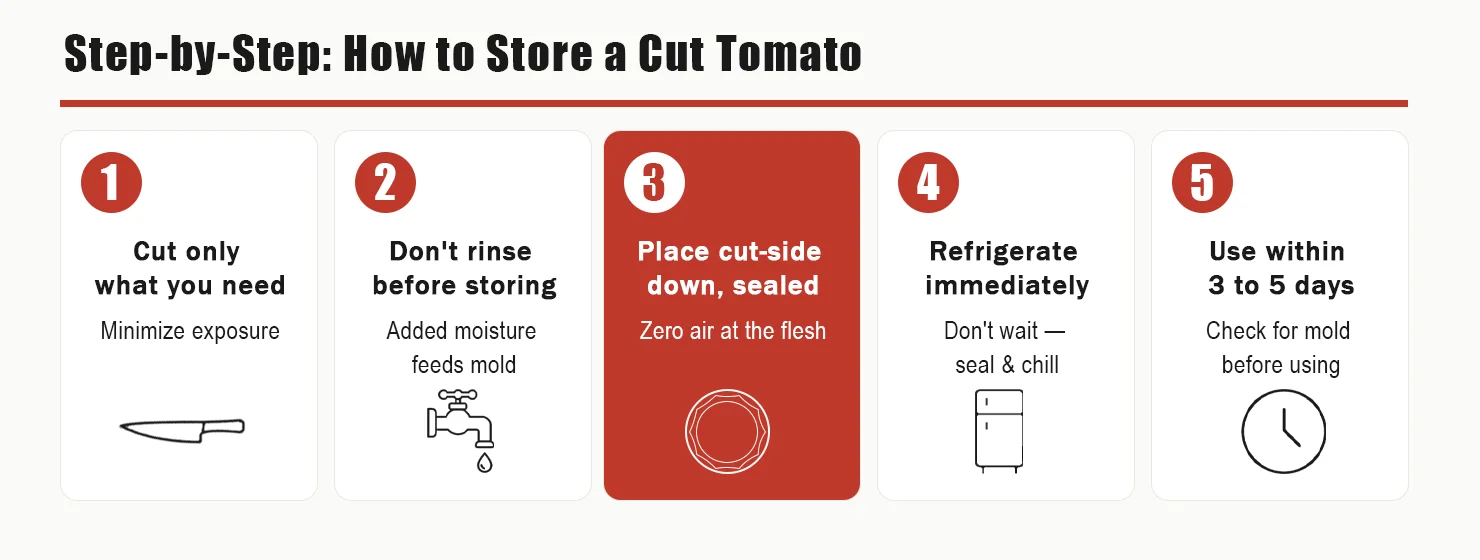
Step-by-Step: The Right Way to Store a Cut Tomato
-
1Pat the cut surface dry Use a paper towel to gently blot any juice from the exposed flesh. Don't press hard — you're just removing surface moisture that would otherwise accelerate bacterial growth.
-
2Place cut-side down on a paper towel Set the tomato cut-side down inside your container. The paper towel acts as a moisture wick. If you're using a silicone keeper, you can skip the paper towel — the keeper itself creates the seal.
-
3Seal tightly and refrigerate Close the lid firmly. Store on the top shelf or in the door — the warmest part of the fridge. This keeps the temperature above the 50°F threshold where tomato flavor compounds start to degrade.
-
4Rest at room temperature before eating Take the tomato out 20 to 30 minutes before you need it. Cold suppresses flavor. A short rest at room temperature brings the aroma and sweetness back.
Does Refrigeration Actually Ruin Tomato Flavor?
This is one of the most repeated pieces of kitchen advice — and it's only half true. The original science behind "never refrigerate tomatoes" was based on studies of whole, unripe tomatoes. For those, cold genuinely does halt the ripening process and degrade the volatile flavor compounds.
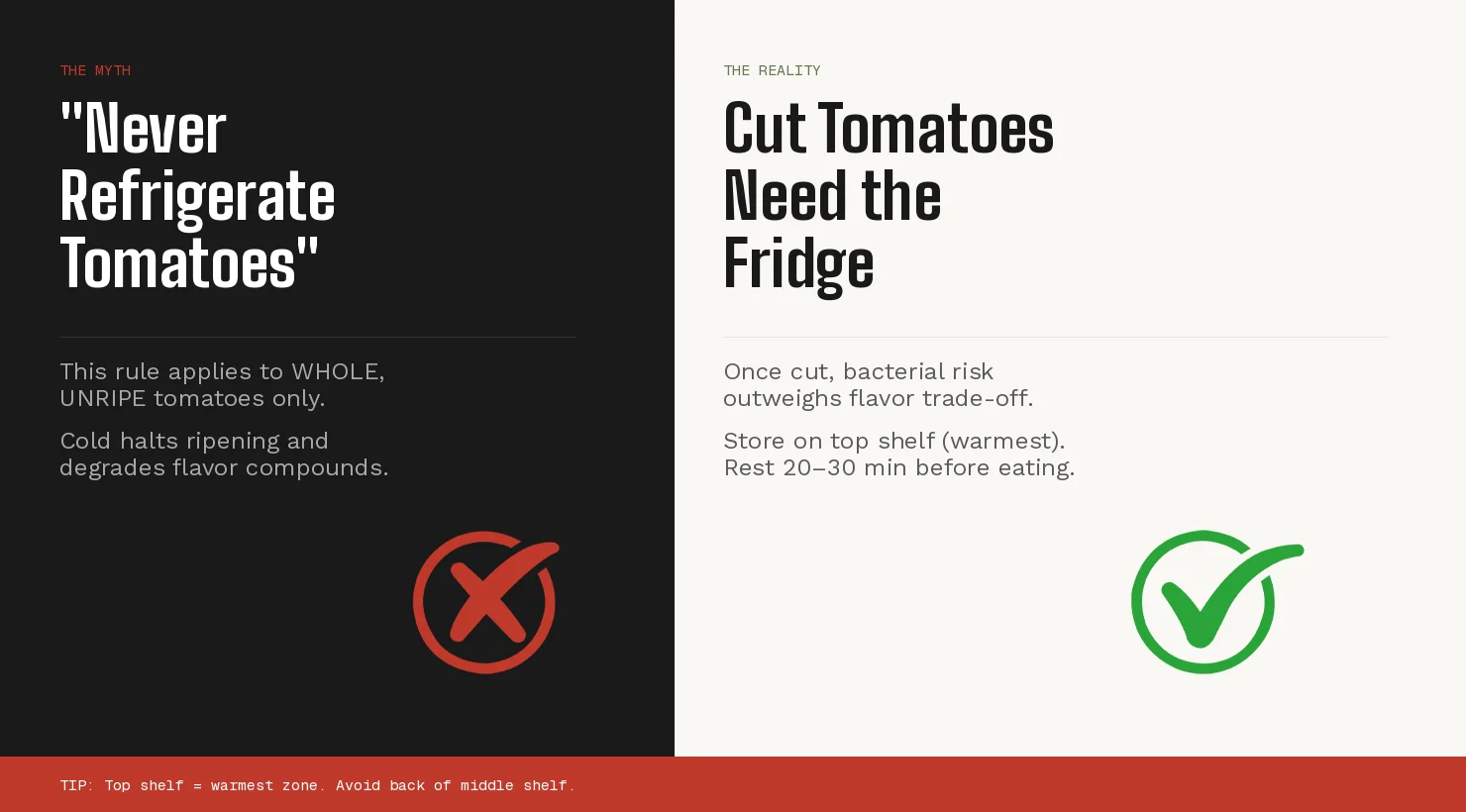
But once a tomato is cut, the calculation changes completely. The bacterial risk of leaving exposed flesh at room temperature outweighs the flavor trade-off of refrigeration. As long as you let the tomato rest at room temperature before eating, you recover most of the lost flavor.
The real enemy isn't the fridge — it's the coldest parts of the fridge. Keep cut tomatoes on the top shelf, not at the back of the middle shelf where temperatures hover near freezing. A degree or two makes a noticeable difference in texture after a few days.
What About Freezing Cut Tomatoes?
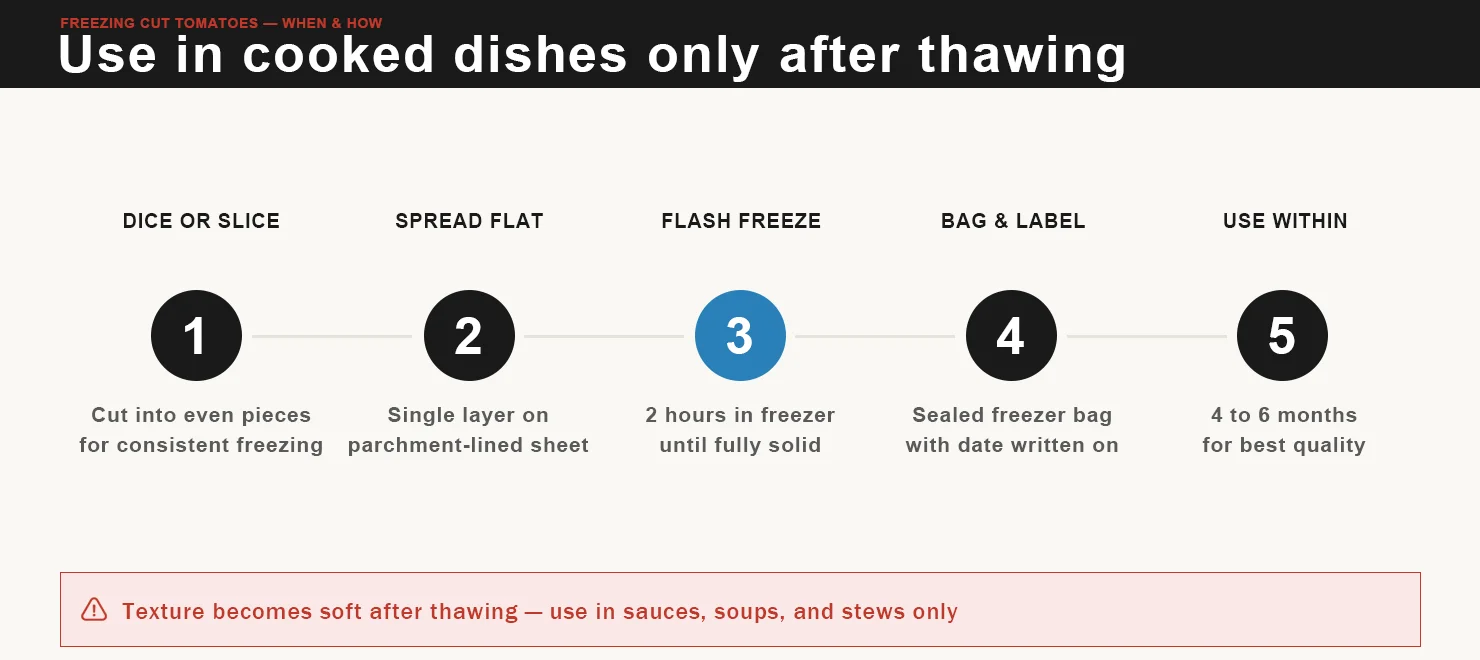
Freezing is a valid option — but only if you're planning to cook with the tomatoes later. The high water content of fresh tomatoes means ice crystals form during freezing and rupture the cell walls. When thawed, the texture is soft and watery. Fine for pasta sauce, soup, or stew. Not for a salad or sandwich.
To freeze properly: dice or slice the tomato, spread pieces on a parchment-lined baking sheet, freeze until solid (about 2 hours), then transfer to a freezer bag. This flash-freeze method prevents clumping and lets you grab just the amount you need. Frozen tomatoes keep well for 4 to 6 months.
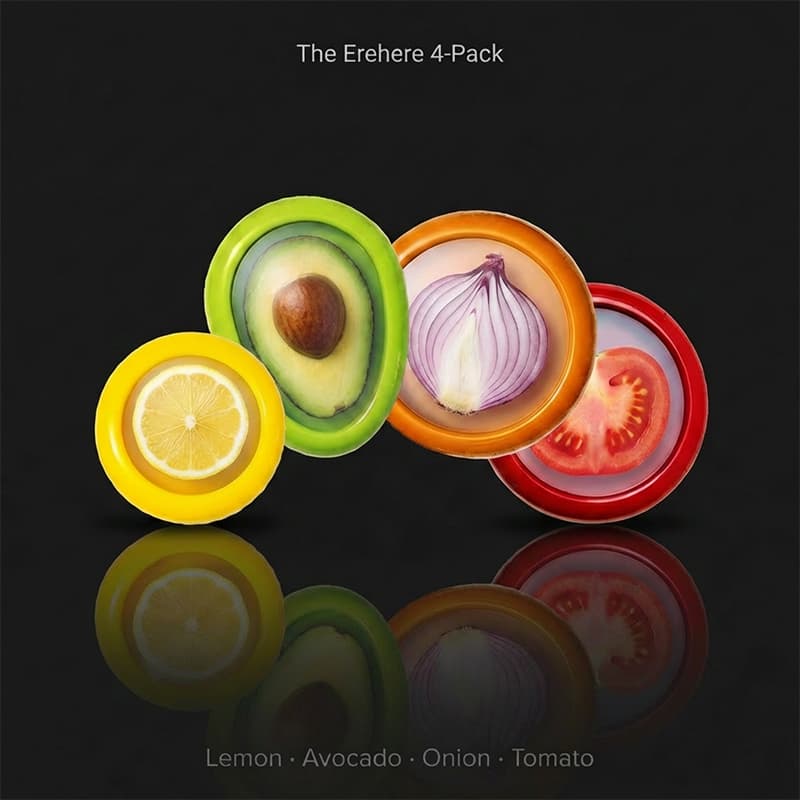
Stop Wasting Half a Tomato
Our silicone keepers are designed to seal directly against cut produce — tomatoes, avocados, onions, lemons. No plastic wrap wrestling. No slimy containers. Just a snug fit that keeps food fresh for days.
See the 4-Pack Fresh Keeper Set →Frequently Asked Questions
How long does a cut tomato last in the fridge?
Should you store cut tomatoes cut-side up or cut-side down?
Can you store a cut tomato at room temperature?
Why does my cut tomato get slimy in the fridge?
Can you freeze a cut tomato?
Does plastic wrap work for storing cut tomatoes?
The Bottom Line
Cut tomatoes don't have to be a race against the clock. The method matters more than most people realize. Cut-side down, paper towel underneath, sealed container, warmest part of the fridge — that combination consistently delivers 3 to 5 days of genuinely usable tomato.
Plastic wrap is the trap most people fall into. It looks like it's working, and then by day 3 you open the container to a slimy mess. A proper seal — whether that's a rigid lid or a silicone keeper designed for cut produce — makes a meaningful difference in how long your tomato stays worth eating.
And whatever you do: let it rest at room temperature before eating. Twenty minutes is enough to bring back the flavor the fridge suppressed. Cold tomatoes taste flat. Room-temperature tomatoes taste like tomatoes.

