
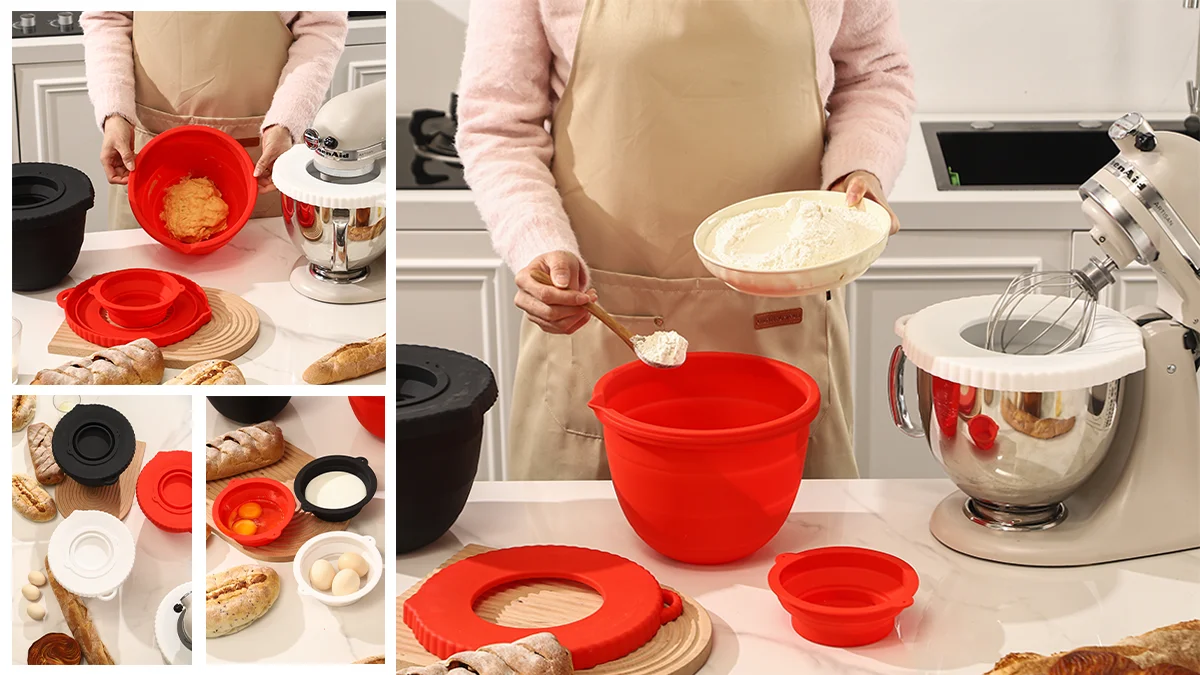
Last December, I was three batches deep into Christmas cookie production when it finally happened. Powdered sugar dusted the entire counter. A streak of vanilla extract ran down the front of my pouring shield. Flour somehow ended up on top of the fridge.
My KitchenAid Artisan was doing its job. The plastic shield that came with it was doing nothing.
That night I ordered my first silicone bowl liner. Six months and about forty bakes later, the original shield is sitting in a drawer. I'm not putting it back on.
Here's the side-by-side I wish someone had given me before I spent another $24 on a "replacement" pouring chute.
Bottom Line
A silicone bowl liner stretches over your KitchenAid bowl rim like a fitted lid with an open spout. It actually contains the splatter, fits snug at high speeds, and goes in the dishwasher. If your pouring shield is leaking flour or has a cracked chute, switch — you're buying the same broken design twice if you replace it with another shield.
KitchenAid Pouring Shield vs. Silicone Bowl Liner: Quick Comparison
| Feature | KitchenAid Pouring Shield | Silicone Bowl Liner |
|---|---|---|
| Splatter control | Partial — top stays open | Full — covers entire rim |
| Fit on bowl | Loose, slides at high speeds | Stretches snug, stays put |
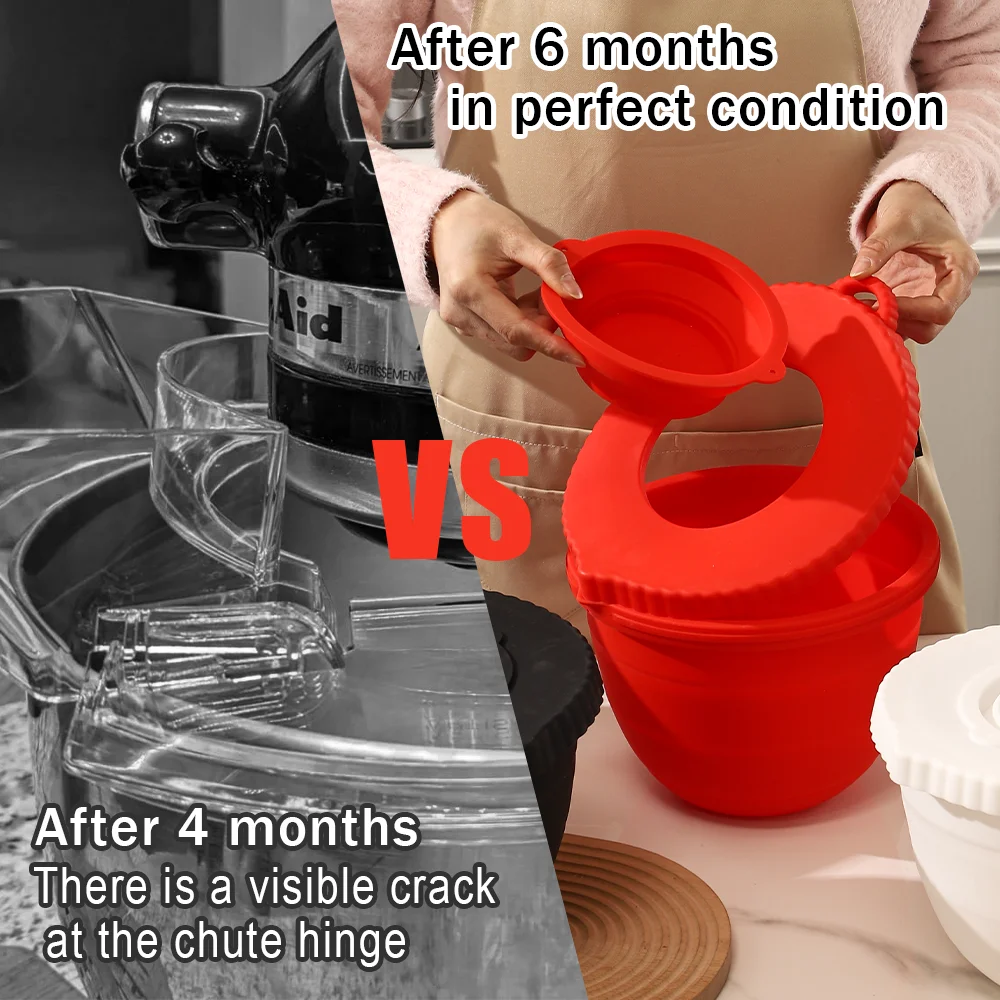
| Durability | Plastic cracks at chute hinge after 4-6 months | Food-grade silicone, no stress fractures |
| Cleanup | Dough sticks in seam, hard to clean | Top rack of dishwasher, peel & rinse |
| Pouring access | Built-in chute (narrow, prone to clogs) | Flip-up spout or wide ingredient opening |
| Price | $24-30 (replacement) | $15-22 |
The Pouring Shield Problem: Why Mine Failed Me
Flour Still Flew Everywhere
The original shield only covers about 60% of the bowl rim. Anything above the spout hole has nothing stopping it. The first time I made shortbread on speed 4, a small flour cloud puffed straight up and powdered my glasses.
I tried slowing down. That worked for the flour but doubled my mixing time and left butter streaks. I tried draping a dish towel over the gap. That worked until the towel got caught in the planetary gear.
The shield is a half-solution by design.
It Never Fit Quite Right
Mine slid every time I used the dough hook. Even with the tab clipped under the bowl rim, the moment dough started climbing the hook, the whole shield rotated about 30 degrees and disengaged.
The 5-quart Artisan and the 6-quart Pro use different bowls. The same shield model "fits" both with slightly different snugness. Mine was the loose one.
The Plastic Felt Cheap
After about four months of regular use, the hinge where the chute meets the shield body cracked. Not a clean snap — a stress fracture that grew every time I lifted it off. I bought the New Metro Design replacement chute for $24. Same fracture, same spot, six weeks later.
That's when I started looking at silicone.
What's a Silicone Bowl Liner Anyway?
Picture a thick band of food-grade silicone shaped to stretch over your KitchenAid bowl rim. Wide opening on top for adding ingredients, fitted spout for pouring, sides tall enough that batter can't escape.
Mine — the silicone bowl liner that fits 5-quart KitchenAid bowls — sits about an inch above the bowl edge and seals tight enough that I can run the mixer on speed 8 without losing a single grain of sugar.
It's not a pouring shield with a different name. It's a different category of tool.
How It's Different From the Original Shield
The pouring shield is a rigid plastic ring with a chute and a tab. It clips on. It rotates. It blocks part of the bowl.
The silicone liner is flexible. It stretches over the rim and grips the entire circumference. There's nothing to slide because there's no clip — the silicone itself holds tension against the bowl. That single design change fixes most of the shield's problems.
Side-by-Side: 5 Real Tests
I ran the same five recipes through both setups. Same KitchenAid Artisan 5-quart, same speed settings, same ingredients. Here's what happened.
Test 1 — Sandwich Bread Dough (Speed 2 with Dough Hook)
Pouring shield: Dough climbed the hook within 90 seconds. As the hook spiraled up, the shield rotated about 30 degrees and disengaged from the bowl rim. I stopped twice to push dough back down.
Silicone liner: Dough still climbed (that's a hook problem, not a cover problem), but the liner stayed put. I scraped down once at the end. No rotation, no slippage.
Winner: Liner, by a wide margin.
Test 2 — Whipped Cream (Speed 8)
Pouring shield: A fine mist of cream droplets escaped through the open top. Tiny dots showed up on the shield itself and on the wall behind the mixer.
Silicone liner: Zero escape. The taller silicone wall blocked everything that the open-top shield couldn't.
Winner: Liner.
Test 3 — Chocolate Chip Cookie Dough (Adding Mix-Ins on Speed 2)
Pouring shield: I added 2 cups of chips through the chute. About a tablespoon bounced out and landed on top of the shield. Two ended up on the counter.
Silicone liner: I poured the chips through the wider top opening directly into the bowl. None bounced because the silicone walls funneled them down.
Winner: Liner — the wider opening is more practical than the small chute.
Test 4 — Banana Bread Batter (Pouring at the End)
Pouring shield: The chute spout works for adding liquids in, but pouring batter back out requires removing the entire shield. The chute is too narrow to dump from.
Silicone liner: My liner has a flip-up section on the front edge. Tilt the bowl, batter pours straight into the loaf pan. No removal needed.
Winner: Liner, depending on the model.
Test 5 — Cleanup
Pouring shield: Dough wedges into the seam where the chute meets the body. The hinge collects flour. I had to use a toothpick on more than one occasion.
Silicone liner: Peel off the bowl, rinse, top rack of the dishwasher. Done in 10 seconds.
Winner: Liner.
Who Should Switch (and Who Shouldn't)
Switch If You...
Bake bread or pizza dough regularly — the dough hook rotation problem is real. Use your mixer on high speeds for whipped cream, meringue, or buttercream. Have a 5-quart or 6-quart bowl-lift or tilt-head Artisan. Already replaced the chute once and it's failing again. Want to stop wiping flour off your countertops every Sunday morning.
If any of those sound like you, a food-grade silicone splash guard will outperform the original within the first week.
Stick With the Original Shield If You...
Only use your mixer for occasional cake batter at low speeds. Have a stand mixer brand that isn't KitchenAid (silicone liners are sized for KitchenAid bowls specifically). Or you hate the look of silicone in your kitchen photos — fair, the shield does look more "appliance store."
If your mixing happens once a month and stays under speed 4, the original is fine. Most home bakers I know are well past that.
Frequently Asked Questions
Does a silicone bowl liner fit all KitchenAid mixers?
Most are made for 5-quart and 6-quart bowls. The 4.5-quart Classic and the 7-quart Pro Line use different bowl diameters, so check the spec sheet before ordering. The Erehere product page lists exact bowl compatibility under each size.
Can you use it with the dough hook?
Yes. The liner won't stop dough from climbing the hook (nothing does — that's hook geometry), but it won't rotate or pop off when the climbing happens. You'll still scrape down once or twice with sticky doughs.
Is silicone safe at high mixer speeds?
Yes, food-grade silicone is rated for far higher temperatures and physical stress than a stand mixer creates. Make sure the liner you buy is BPA-free and FDA-approved silicone, not a cheaper plastic blend. Cheap silicone smells off — if it has any chemical odor when you unbox it, return it.
How do you clean a silicone bowl liner?
Top rack of the dishwasher. If you're hand-washing, soap and a sponge get everything off in under a minute because nothing sticks to silicone the way it does to plastic. Dough wipes off in one pass.
Will a silicone bowl liner replace the pouring chute too?
Most models include either a flip-up pouring spout or a dedicated opening for adding liquid ingredients. So yes — one liner replaces both the splash shield and the pouring chute. You don't need both.
How does it compare to the $24 New Metro Design Pouring Chute?
The New Metro chute solves the pouring problem but does nothing for splatter. It's an add-on to the original shield, not a replacement. A flexible silicone bowl liner alternative solves both at the same price point or less, typically $15-22, with no plastic to crack.
Our Verdict
- The KitchenAid pouring shield is a half-solution that hasn't been redesigned since the 1990s. It rotates, it cracks, it leaks flour from the top opening.
- A silicone bowl liner fixes every one of those problems with one design change — flexibility instead of rigidity. Same price point. Better fit. Dishwasher safe.
- If you bake more than once a month, switch. If your shield is already cracked, definitely don't buy another shield. You'll be back here in six months.
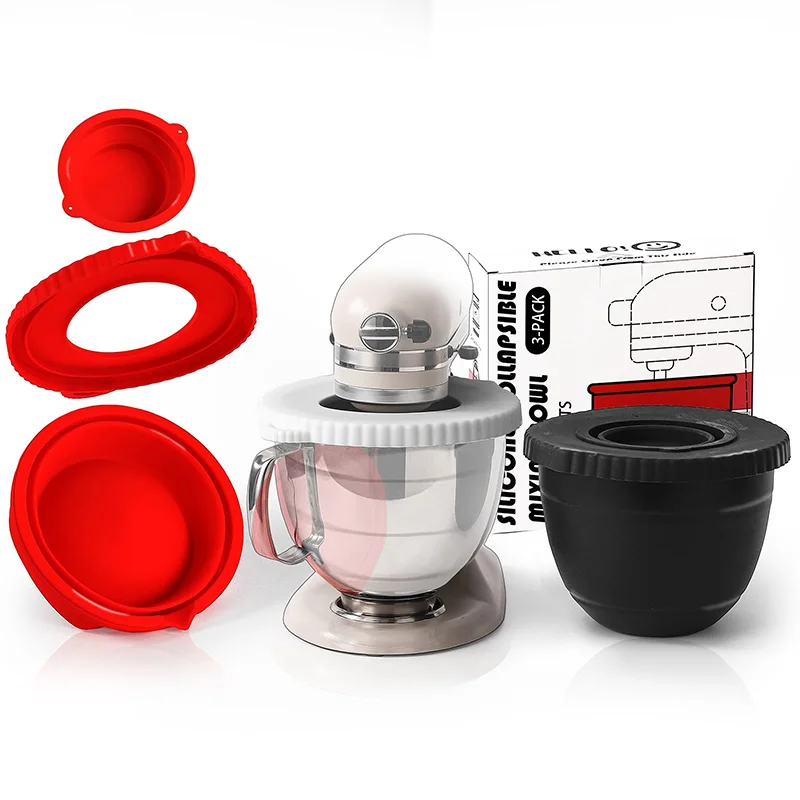
Ready to stop fighting your pouring shield? Check out our silicone bowl liner for stand mixers — fits 5-quart and 6-quart KitchenAid bowls, ships free in the US, and arrives in 2-5 days.

